

Yoga vs Pilates • Singapore
Yoga vs Pilates: Which Is the Better Workout?
Updated: March 2026 · Pilatique Singapore — STOTT PILATES® Licensed Training Centre
If you are comparing yoga vs Pilates in Singapore, you are probably not looking for a history lesson. You are trying to decide what suits your body, your goals, and your current limitations.
Both yoga and Pilates can be useful. But they are not interchangeable. For many adults dealing with stiffness, posture issues, recurring discomfort, or uncertainty about where to start, Pilates is often the more structured and adaptable entry point.
Yoga and Pilates can both help. But if you need more support, more guidance, better progression, or a safer starting point for stiffness, pain, or poor movement quality, Pilates is often the better workout to begin with.
Yoga vs Pilates: quick comparison
| Area | Pilates | Yoga |
|---|---|---|
| Main focus | Strength, support, control, alignment, movement quality | Flexibility, poses, breath, flow, mobility |
| How it progresses | Highly adaptable and easier to modify precisely | Often more sequence-based and pose-based |
| Best starting fit | People with stiffness, posture issues, pain, or low confidence in movement | People who already tolerate movement well and enjoy yoga-style practice |
| Equipment | Uses apparatus like Reformer, Cadillac, and Stability Chair for support and progression | Usually bodyweight and mat-based |
| Why people choose it | Better structure, clearer instruction, safer progression | Stretching, flow, tradition, enjoyment of the practice style |
The short version: yoga and Pilates overlap in some areas, but Pilates usually gives more room for individualisation when the body needs more support.
Yoga vs Pilates: which is better for your goal?
For beginners
Pilates is often the better starting point because exercises can be adjusted more precisely and progressed more clearly.
For back pain or stiffness
Pilates is often the better choice because it focuses on support, control, and movement quality rather than asking the body to fit set positions.
For flexibility
Yoga tends to place more emphasis on stretching and flexibility work.
For strength and posture
Pilates is usually stronger here because it builds support, alignment, and more organised movement.
For people who feel overwhelmed by exercise
Pilates often feels easier to understand because it is more guided, more structured, and less chaotic than many class formats.
For people who already love yoga
You may still benefit from Pilates as the strength-and-support layer that helps your yoga practice feel better and more sustainable.
Main differences between yoga and Pilates
Yoga and Pilates can look similar from the outside, especially to beginners. Both may involve mats, breathing, mobility, and low-impact movement. But the experience inside the session is different.
Yoga tends to be more pose- and sequence-based
Depending on the style, yoga may ask the body to move through or hold more defined positions. That can be useful if the body tolerates it well.
Pilates tends to be more progression- and control-based
Pilates is usually easier to adapt when someone needs more support, more specific cueing, or a more gradual return to strength and mobility.
Yoga often asks for range
That can feel good for some people, but less good for bodies that are already stiff, guarded, compressed, or compensating.
Pilates often builds support first
Instead of pushing range early, Pilates often prioritises trunk support, alignment, breathing strategy, and how movement is organised.
This does not mean yoga is “bad.” It means yoga is not always the best first fit for every body, especially when stiffness, pain, or poor movement quality are already in the picture.
When Pilates is often the better choice
Pilates is often the better starting point if you:
- feel stiff despite stretching
- have back, neck, or shoulder discomfort
- sit for long hours and feel compressed
- want clearer instruction and more structure
- are new and do not want to guess your way through exercise
- have tried yoga but still feel unstable, tight, or unsupported
- need a more rehab-aware approach to movement
For many people, Pilates is not better because it is “harder.” It is better because it is clearer. It gives the body a more organised way to move.
If pain or restrictions are already part of the story, see Clinical & Rehab Pilates in Singapore.
If you are also trying to understand where Pilates sits compared with more treatment-led recovery support, read Pilates and Physical Therapy in Singapore.
If you are also comparing Pilates to more strength-based training, read Pilates vs Weight Training in Singapore to understand when Pilates should come before heavier loading.
When yoga may suit you better
Yoga may still be a good fit if:
- you already move fairly well and tolerate range comfortably
- you enjoy yoga-style practice and the way it feels
- you are not currently limited by recurring pain or significant stiffness
- you want that specific type of flow, stretching, or practice style
Many people genuinely enjoy yoga and do well with it. The issue is not whether yoga is valuable. The issue is whether it is the right first fit for your body right now.
Can you do yoga and Pilates together?
Yes — many people benefit from doing both.
A common practical approach is to build better support, strength, and movement quality through Pilates first, then layer yoga on top if you enjoy it.
This tends to work well because Pilates often fills the gaps that make yoga feel frustrating or overly demanding for some people.
Why Pilates equipment changes the experience
One major difference between yoga and Pilates is the use of apparatus. Pilates uses equipment such as the Reformer, Cadillac, and Stability Chair to support, challenge, and adapt movement more precisely.
This matters because equipment gives Pilates more options for:
Support
Apparatus can help people find positions and movement patterns they may struggle to access well on the floor.
Progression
Springs and set-up options allow the work to be scaled up or down more intelligently.
Resistance
Pilates can build strength in a more guided, organised way without defaulting to aggressive loading.
Precision
Equipment helps expose compensation and improve movement quality, not just effort.

The Reformer
Useful when you need more guided resistance, better support, and more options to build strength without overloading the wrong areas.
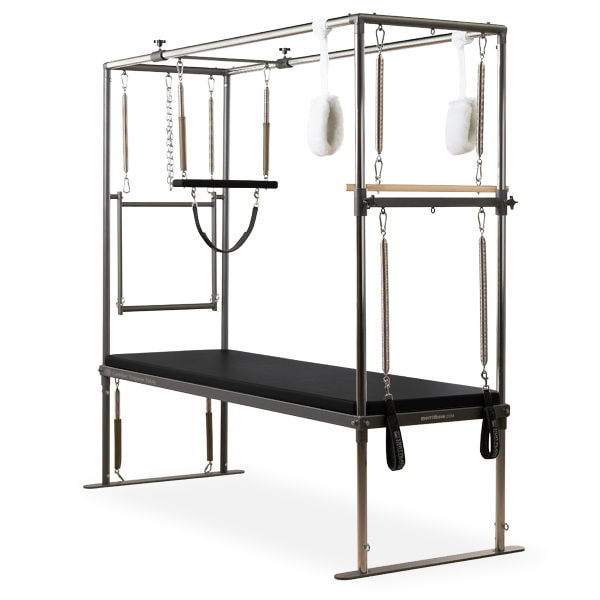
The Cadillac
Helps create movement options and support that are simply not available on a basic mat-only format.

The Stability Chair
Useful for control, support, and building organised strength in a more focused way than a generic class setting.
Why this matters in a yoga vs Pilates decision: Pilates is not just “mat work that looks like yoga.” The apparatus gives it more ways to support real bodies with real limitations.
What many people in Singapore actually need
In Singapore, many adults spend long hours sitting, commuting, and working under constant cognitive load. The result is often a familiar pattern:
- tight hips
- stiff upper back
- neck and shoulder tension
- compressed lower back
- a body that feels “tight” but not actually well supported
That is why for many people here, the real issue is not choosing between two trendy workouts. It is choosing the format that helps the body feel less strained and more organised again.
For that reason, Pilates is often the more practical starting point for back pain, neck and shoulder tension, posture-related stiffness, and people who feel unsure about group exercise environments.
For some of these people, the next question is not only Yoga vs Pilates, but also Pilates vs Weight Training — especially when they want to get stronger without loading a body that still moves poorly.
What is the best next step?
If you are unsure which to choose, start with a structured introduction rather than guessing.
If you already have pain, stiffness, or a history of flare-ups, go directly to Clinical & Rehab Pilates.
If part of your hesitation is concern about some yoga poses feeling wrong for your body, also read Cool Yoga Poses Could Be Destroying You.
Frequently Asked Questions
Is Pilates better than yoga for beginners?
For many beginners, yes. Pilates is often easier to adapt and guide more precisely, which makes it a clearer starting point when someone is stiff, unsure, or not yet moving confidently.
Is Pilates better than yoga for back pain?
Often, yes. Pilates usually gives more focus to trunk support, alignment, and movement control, which makes it a more suitable starting point for many people with back pain or recurring tension.
Is yoga or Pilates better for flexibility?
Yoga usually places more emphasis on stretching and flexibility. Pilates can still improve mobility, but it often does so alongside support, control, and strength.
Can I do both yoga and Pilates?
Yes. Many people benefit from both. A practical approach is often to build better support and movement quality through Pilates first, then layer yoga on top if desired.
Why does Pilates feel easier to customise than yoga?
Pilates uses more exercise progressions and apparatus options, which makes it easier to support, regress, or advance movement based on what the individual body needs.
Not sure whether yoga or Pilates suits your body better?
If you are dealing with stiffness, posture issues, recurring tension, or uncertainty about where to start, Pilatique Singapore can help you choose the more sensible next step.
Start with a guided entry point, or go straight into a more suitable Private or rehab-centric pathway if your body already needs closer support.