

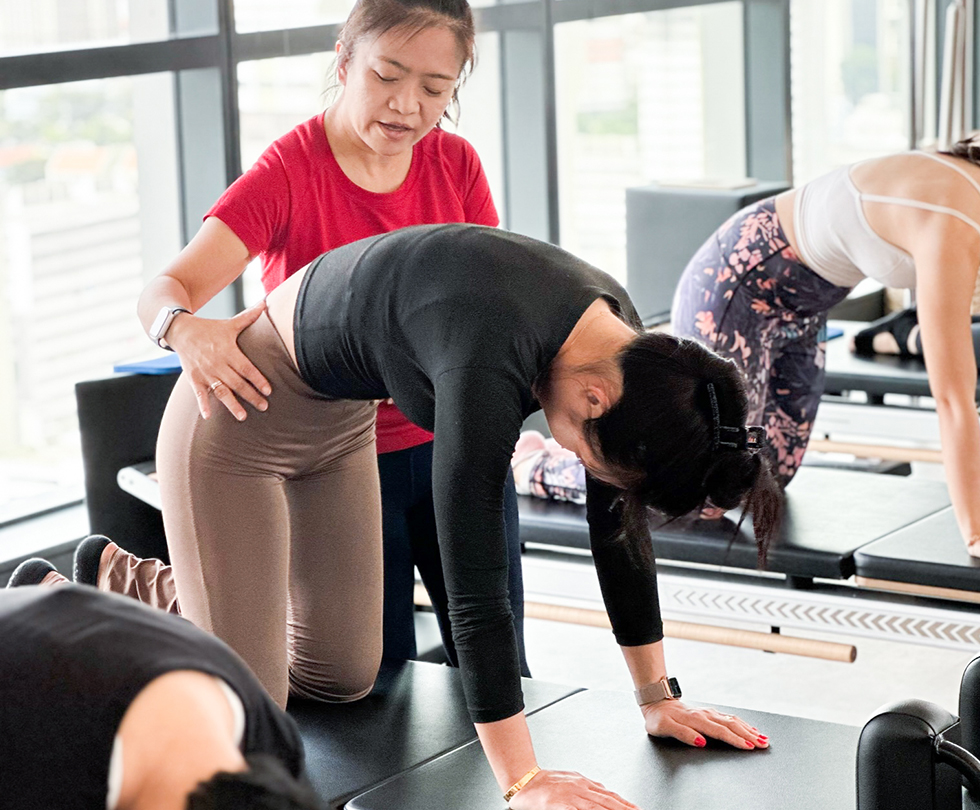
All You Need to Know About International Pilates Training
If you are exploring Pilates teacher training, you are not just choosing a course. You are choosing where to invest serious money, time, energy, and professional effort. That is why “international Pilates training” deserves more thought than a logo, a marketing promise, or a familiar local name.
In Singapore especially, certification and training pedigree matter enough that students should not choose blindly. The right pathway should fit your goals, your learning style, and the kind of instructor you want to become.
What “international Pilates training” actually means
Many people use the word international loosely. In practice, serious international Pilates training usually means you are learning under a recognised education system with a clear methodology, structured curriculum, practical teaching expectations, assessment standards, and continuing education pathways.
In other words, it is not only about whether a school sounds impressive. It is about whether the training framework is legible beyond one city, one studio group, or one local marketing circle.
What Pilates is — and why education quality matters
Pilates is not just a list of exercises. At its best, it is a method of movement education that helps people improve body awareness, movement control, postural organisation, strength, mobility, and coordination.
That is also why education quality matters so much. A better-trained instructor is usually better at observing movement, selecting exercises, adjusting load, cueing clearly, and progressing clients safely.
- posture and alignment awareness
- stability and control
- mobility where appropriate
- breath and movement coordination
- apparatus-based progression and exercise application

Why people pursue international Pilates training
People do not enter Pilates education for one reason only. For some, it is a full career transition. For others, it is a way to deepen an existing movement profession. For some, it begins as personal development but grows into something more serious.
Career switchers
You may want a more skill-based, human-centred profession that values teaching quality and long-term craft.
Fitness professionals
You may want more precision, better programming logic, stronger cueing, and apparatus understanding that separates you from generic group instruction.
Allied health or rehab-minded professionals
You may want a movement system that sharpens observation, progression reasoning, and exercise modification in more complex bodies.
Why this decision matters even more in Singapore
In Singapore, certification is not the only thing that matters — but it matters enough that students should not choose casually.
Studio owners often look at training background when hiring. In a relatively small market, your education pedigree travels quickly. For instructors who want to work in premium studios, teach more serious clients, or build a long-term career, the training brand and pathway can influence how easily others understand your background.
Pilates teacher training can require significant money, time, effort, and opportunity cost. It makes sense to choose a route that fits your goal and career intention, not just the shortest or loudest option.
How to choose a Pilates certification programme intelligently
Most prospective students ask the wrong first question. They ask, “Which certification sounds the most impressive?” A better question is, “Which pathway actually fits my long-term goal?”

Do not confuse local popularity with international recognition
This is where many prospective students get misled.
A provider may be well known locally. It may have several branches, strong community presence, visible marketing, or familiar educators. Those things can create confidence — but they are not automatically the same as graduating under a globally recognised Pilates education system.
Local visibility can be real. Regional footprint can be real. But those are still different signals from international Pilates education recognition.
ACE, NASM, affiliations, and certification confusion
Another area that confuses prospective students is when they see familiar names from the broader fitness industry attached to a Pilates training offer.
Some organisations such as ACE or NASM are respected fitness credentialing bodies with their own certification ecosystems. That can matter for continuing education or broader fitness-industry relevance. But it is not the same thing as being trained under a globally recognised Pilates methodology school.
In hiring reality, many studio owners still look first at the Pilates school or method name they recognise. That tells them more directly what teaching framework, apparatus language, progression logic, and education culture the instructor came through.
Affiliations, approval badges, educator backgrounds, and familiar logos can all sound impressive. They are worth understanding — but they should not replace the more important question of what Pilates education system you are actually graduating under.
What type of teacher do you want to become?
This question matters more than many students realise. Your learning route should support the role you actually want.
- Do you want to teach mainly in a studio with apparatus?
- Do you want to work with more premium private clients?
- Do you want a rehab-informed movement role?
- Do you want a qualification that is easier to explain internationally?
- Do you want deep teaching craft, or just a fast entry point?

Where STOTT PILATES fits in the international landscape
There are several internationally known Pilates education names in the market, including STOTT PILATES, BASI, Polestar, and others. Serious students should understand that these schools may differ in philosophy, teaching language, course structure, mentorship style, and the kind of instructor they are trying to develop.
STOTT PILATES is a contemporary Pilates education system developed under Merrithew. It is known for a structured, biomechanics-informed approach, strong apparatus integration, and a clear pathway across courses, required hours, exams, and continuing education.
For students who value progression, teaching clarity, and a system that studio owners can recognise and understand, that matters.

STOTT PILATES education routes at Pilatique Singapore
If you already know you want to explore the STOTT PILATES pathway more seriously, these pages will help you make the next correct decision.
FAQ
What is international Pilates training?
It usually refers to Pilates education delivered under a recognisable methodology with structured curriculum, practical expectations, and standards that make sense beyond one local studio network.
Why does certification matter in Singapore?
In Singapore, studio owners often look at training background when hiring, and a recognised education pathway can affect how easily your credentials are understood in the market.
Is local popularity the same as international recognition?
No. A provider can be well known locally and still not carry the same international education recognition as a globally established Pilates methodology brand.
Are ACE and NASM the same as a Pilates certification school?
No. They are broader fitness credentialing organisations. That is different from being trained under a globally recognised Pilates methodology school.
How do I know which Pilates training route fits me?
Start by clarifying your goal, your current background, and the kind of instructor you want to become. Then look at the method brand, prerequisites, apparatus exposure, required hours, exam standards, and post-course support before committing.
Where should I start if I am considering STOTT PILATES at Pilatique?
A good sequence is the Teacher Training overview, then Certification, then Courses, depending on how ready you are.
Ask which training path fits your goal
If you are considering international Pilates training, do not decide based on noise alone. Tell us your background, your goal, and your timeline. We will help you understand which route makes the most sense for the kind of instructor you want to become.